
Food Loss and Food Waste Accounting Training
Garda Pangan Knowledge Editorial
Sep 9, 2026
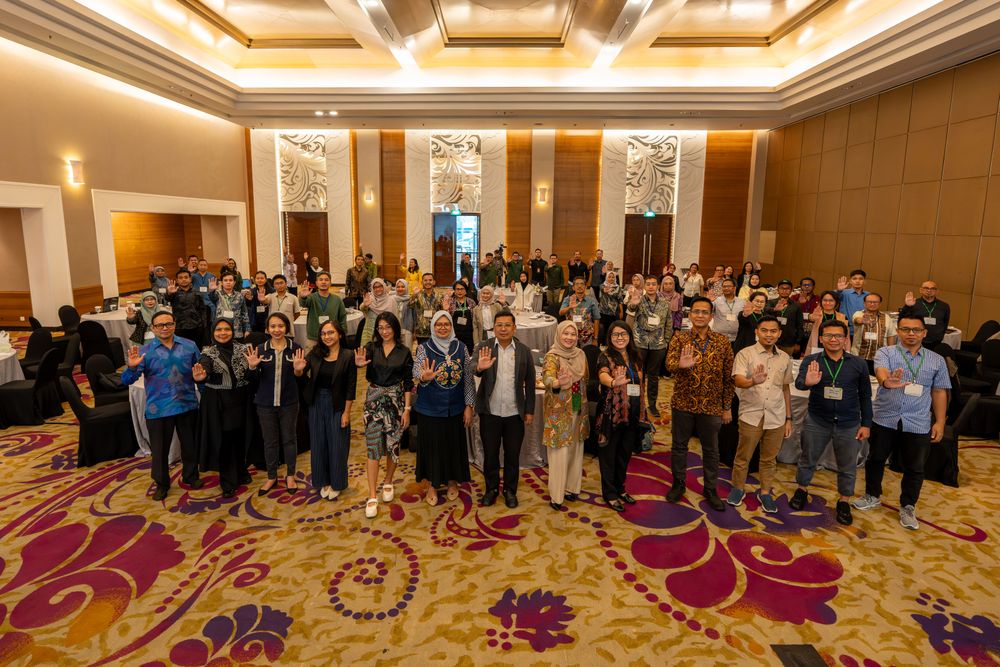
Image courtesy of Garda Pangan
Following the development of the Standard Method for Accounting Food Loss among Farmers and Food Waste in the Retail Sector by Garda Pangan and the Sustainable Food Systems Coalition (KSPL), and its subsequent publication by the National Food Agency (BAPANAS), the method has become a national reference for accounting food loss and food waste (FLW). As the next step, the Indonesia Business Council for Sustainable Development (IBCSD), a partner organization within KSPL, invited Garda Pangan to further expand understanding of the standard food loss and food waste (FLW) accounting method among businesses and local governments and support their efforts to implement FLW accounting.
This initiative was carried out by IBCSD and KSPL through the Food Loss and Food Waste Accounting Training for Businesses and Local Governments, held in Jakarta on September 30–October 1, 2025. The training brought together 60 participants from local governments, the hospitality and restaurant sector (HOREKA), manufacturing companies, and the retail sector. Garda Pangan participated as one of the trainers, sharing its practical experience and knowledge in accounting food loss and food waste in the field.
Garda Pangan had the opportunity to deliver sessions on the methods and instruments for accounting food loss and food waste, which serve as practical guidance for the business sector. During the training, Garda Pangan introduced the standard food loss and food waste accounting method, explained the accounting process and the types of data required, and demonstrated how the accounting results can be translated into estimates of economic, environmental, and nutritional impacts. The training also included guidance on using the Microsoft Excel-based accounting calculator.
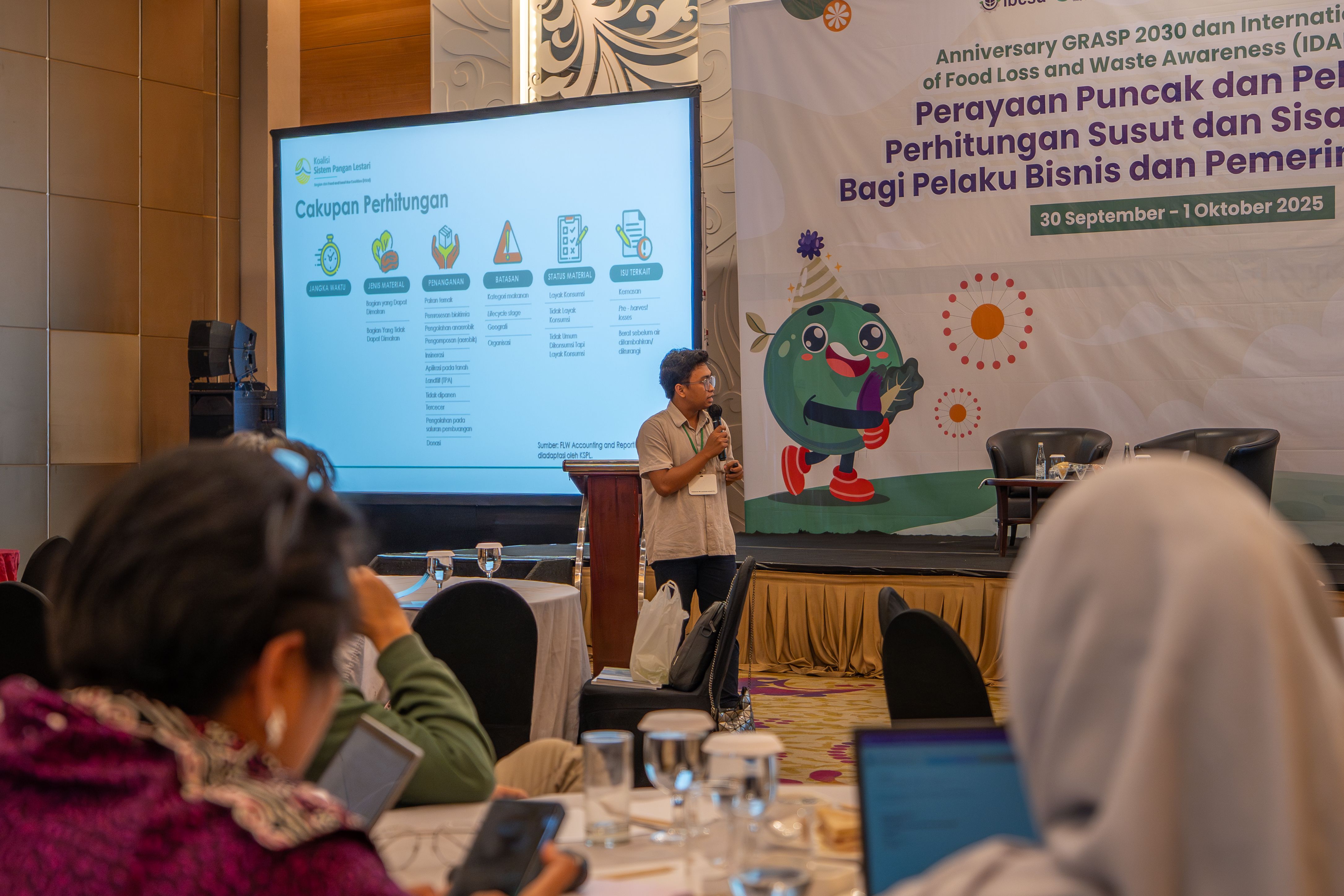 Alfian Muhammad Nur (Garda Pangan) delivers a session on food loss and food waste accounting methods. / Indonesia Business Council for Sustainable Development (IBCSD)
The training generated engaging discussions, particularly because the standard accounting method had only been published the previous year. Participants actively shared case-by-case experiences from their work, particularly those related to production, distribution, and food loss and food waste (FLW) accounting. Garda Pangan’s field experience was brought together with the participants’ day-to-day experiences in dealing directly with production, distribution, sales, and food waste management activities.
Accounting is the first step toward understanding how much FLW is generated, where the critical points of FLW occur, and what needs to be done to begin reducing it. The Target-Measure-Act (TAC) framework introduced in the training places accounting results at the center of the process, using data as the basis for developing actions to reduce FLW.
Following the two-day training, Garda Pangan continued to provide three months of assistance to businesses to ensure that the reported food loss and food waste data were accounted for in accordance with the standard method. This process is intended to ensure that the data are comparable and can serve as a baseline for developing food loss and food waste reduction measures in the following year.