
Piloting Food Waste Accounting and Food Rescue in Jakarta
Garda Pangan Knowledge Editorial
Sep 9, 2026
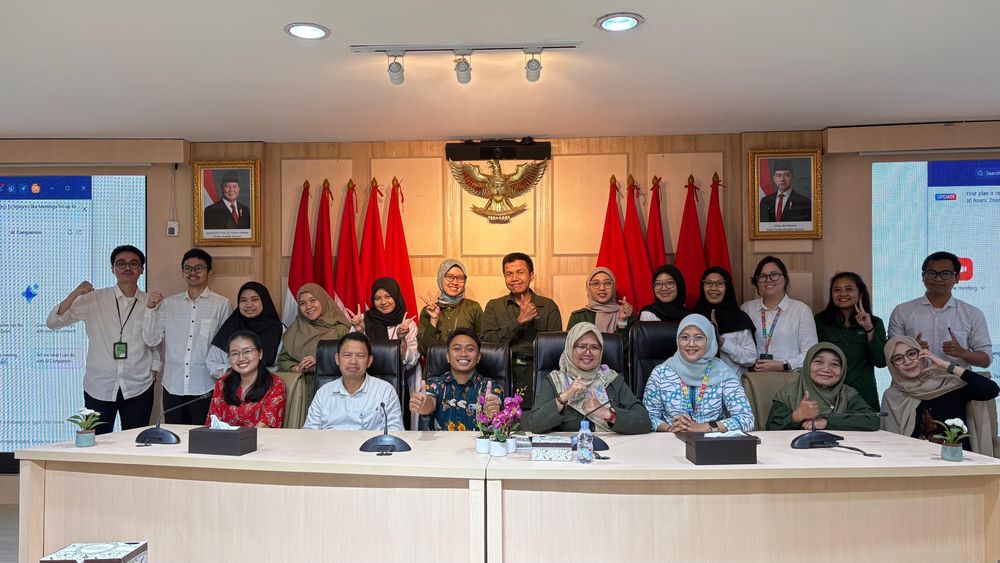
Image courtesy of Garda Pangan
Food waste remains the largest contributor to the waste composition in Jakarta, according to data from the National Waste Management Information System (SIPSN). An estimated 49.87% of the total 3.17 million tonnes of waste generated in 2024 consisted of food waste. This situation not only places an additional burden on waste management at the Bantar Gebang Integrated Waste Management Facility (TPST Bantar Gebang), but also has broader economic and environmental impacts.
At the national level, reducing food waste—more broadly referred to as reducing food loss and waste (FLW)—has become a key priority under the Circular Economy Ecosystem Programme in the 2024–2029 National Medium-Term Development Plan (RPJMN), with a target reduction of 3–5% annually. However, achieving this target requires robust data on the scale, sources, as well as the underlying causes and drivers of food loss and waste generation in Indonesia. Without adequate data, interventions risk being implemented without clear direction, making it difficult to identify the points at which interventions can be most effective.
In response to this need, the National Food Agency (Badan Pangan Nasional/BAPANAS) invited Garda Pangan to conduct a study entitled Piloting Food Waste Accounting and Food Rescue in Jakarta, 2025. The study is intended to serve as a pilot that can subsequently be replicated in other regions across Indonesia. Its objectives are to establish baseline data on food waste in Jakarta and to identify existing food rescue practices.
The study was conducted across four sectors: hotels, retail, food service businesses, and SPPG MBG (Units for the Provision of Nutrition under the Free Nutritious Meals Programme). These four categories were selected because they handle food at a large scale and therefore have significant potential to generate food waste. By examining how food waste is generated and managed within each category, the study aims not only to quantify the volume of food waste generated, but also to document at which stages food waste occurs, how it is managed, and the extent to which food remains suitable for rescue.
The research activities began in July 2025 with the development of the research design. The study adopted methodologies based on two reference documents: Food Waste Accounting Standard for Retail and SNI 3964:2025 on Methods for Sampling and Measuring the Generation and Composition of Household Waste and Similar Household Waste. A total of 81 samples were included in the study, distributed across the five administrative cities of Jakarta.
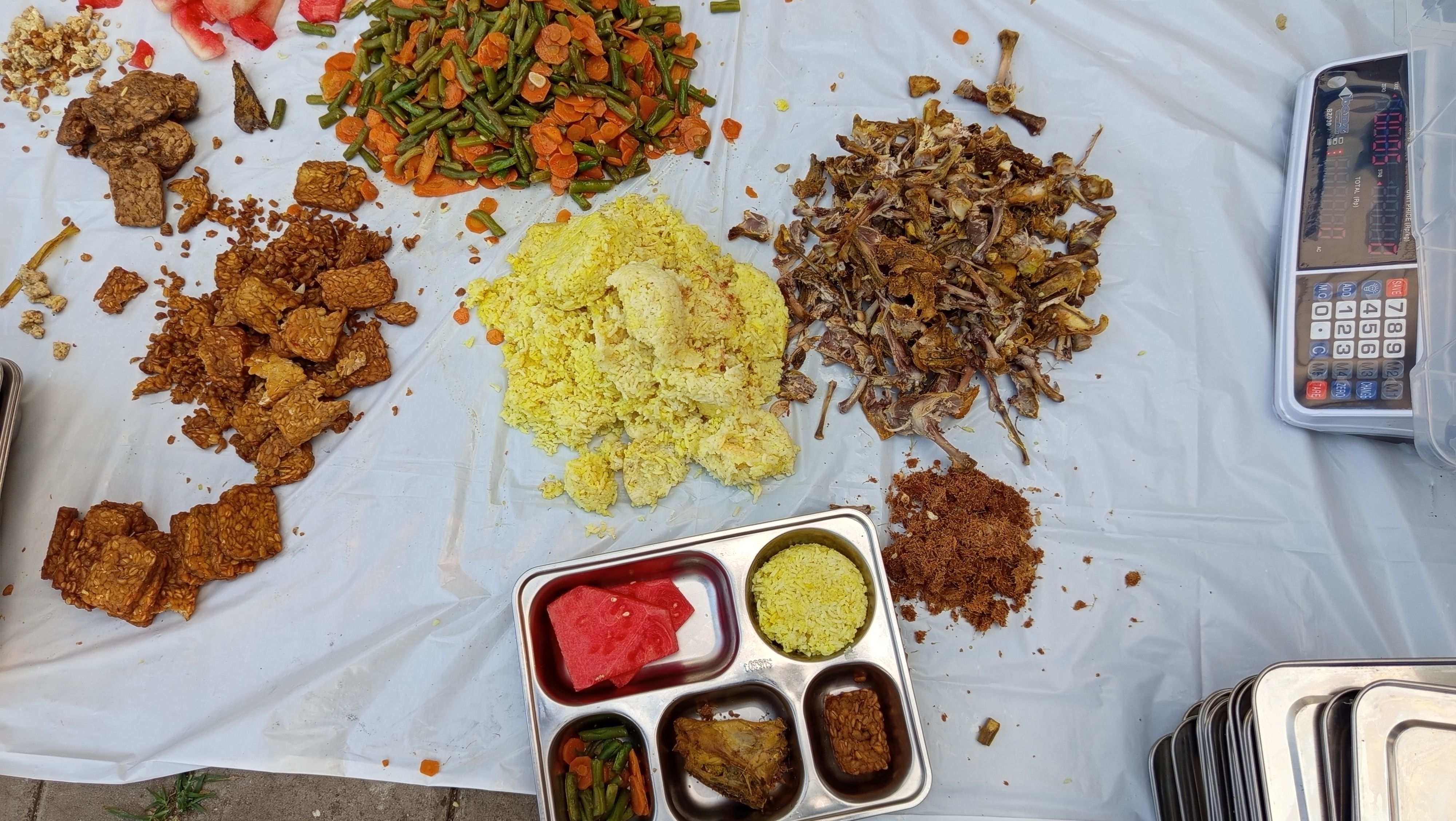 Food Waste Sorting and Accounting at SPPG Facilities in Jakarta/Safira Qurrota Ayun
Field data collection was conducted from September 6 to October 12, 2025, involving four teams, each consisting of one coordinator and two enumerators. Prior to data collection, Garda Pangan conducted a technical training session attended by all enumerators and representatives from BAPANAS. This session served as an initial step to establish a common understanding of the methodology, data collection procedures, and measurement techniques to be applied throughout the study.
The field data collection process began by obtaining consent from respondents. As the study was voluntary, prospective respondents were under no obligation to participate. Therefore, obtaining consent was a crucial first step in enabling the food waste accounting process to be carried out. Once consent was obtained, we worked with respondents to determine the interview date and the date for conducting food waste measurements at their respective locations.
Following the completion of field data collection, Garda Pangan proceeded to process and analyze the data collected while preparing the study report. Throughout this process, the report underwent several rounds of review and refinement based on feedback from BAPANAS. Data processing, analysis, and report writing took approximately two months, culminating in the presentation of the study findings at the National Food Agency Building on December 8, 2025.
The total volume of food waste generated across the five administrative cities of Jakarta in 2025 by the hotel, retail, food service, and SPPG MBG sectors was estimated at approximately 175,415 tonnes. The food service sector accounted for the largest share at 81.9%, followed by hotels at 8.1%, retail at 6.3%, and SPPG MBG at 3.7%. In terms of how the food waste was managed, the majority (66.2%) ultimately ended up in landfills. The findings of this study have been published through the National Food Agency Library (Pustaka Badan Pangan Nasional) and can be accessed here. The full report can also be downloaded here.